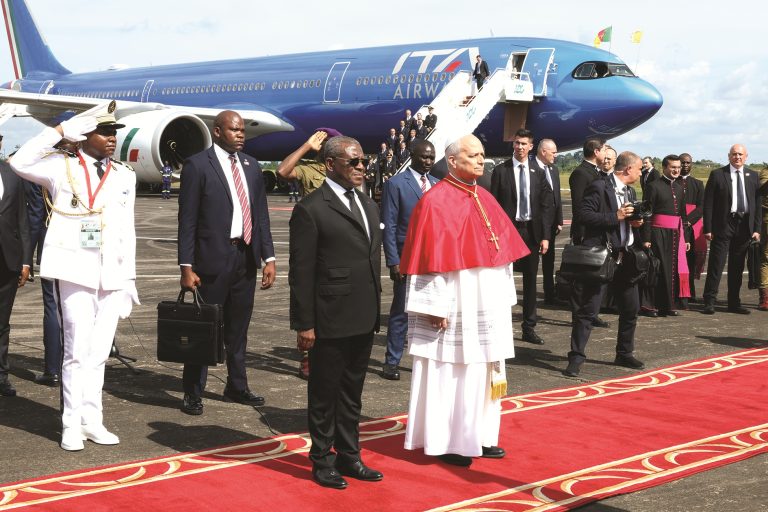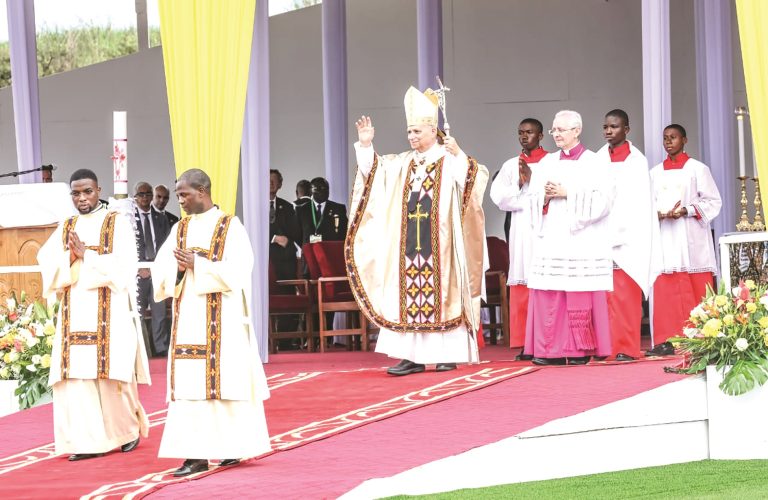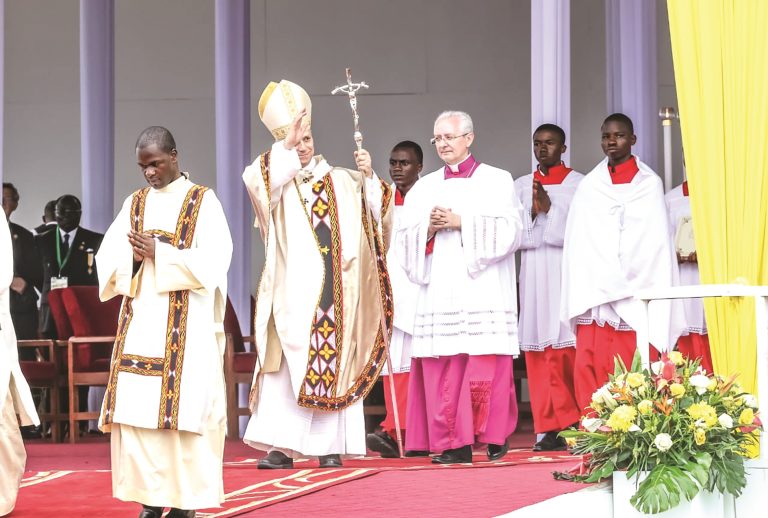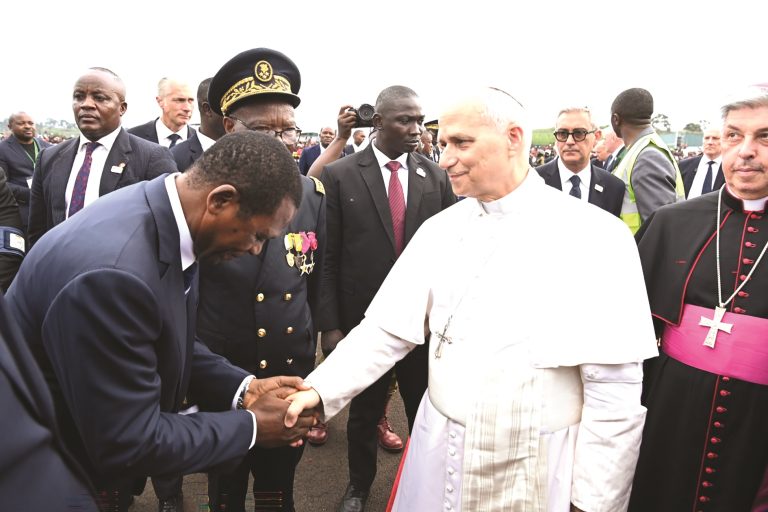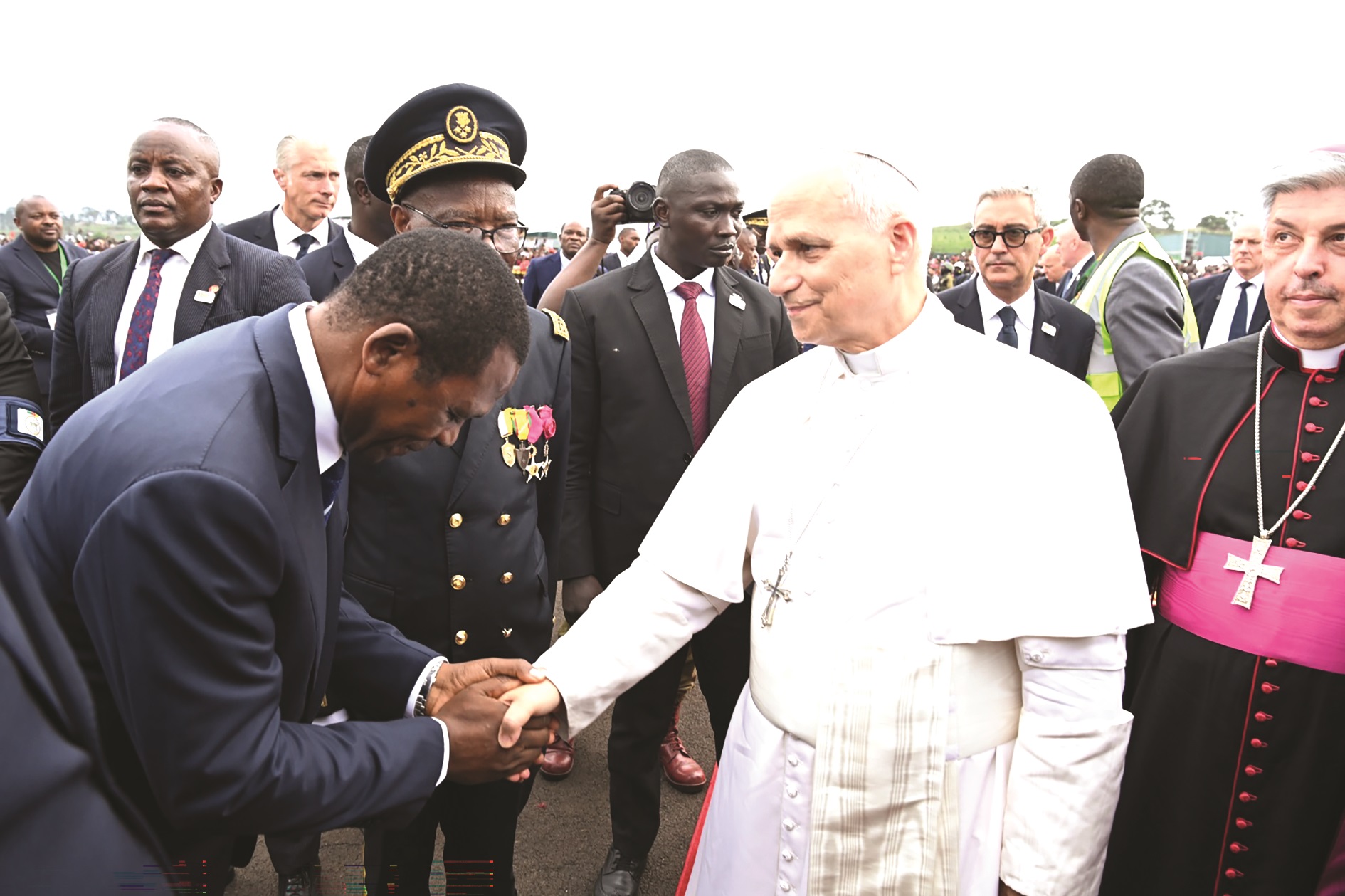
Minister Atanga Nji Paul welcoming pope Leo XIV in Bamenda.
As personal representative of the Head of State during the Pope’s tour in Cameroon, the Minister of Territorial Administration, Atanga Nji Paul, attended a Holy Mass at the Bamenda airport,celebrated by Pope Leo XIV, april 16, 2026.
The minister sat through the papal Mass where Pope Leo was touched by the Anglophone crisis that has caused sorrow, the poor management of resources which has caused migration to other countries, and corruption which has bred hatred and violence.
The Pope said the time has come “today not tomorrow” to bring together the diversity and riches of the country for peace to reign. He called on the people to work for peace and hope. He said it is a moment to change and transform Cameroon to restore unity.
The MINAT Boss was flanked by other cabinet ministers and local administrators. Also present at the Mass were traditional rulers, religious authorities, hundreds of lay faithful and people from different denominations. After the Mass, Minister Atanga Nji wished a farewell to the supreme pontiff before he departed Bamenda by air for Yaoundé for a rest.
Prior to the Mass, the personal representative of the Head of State was present at a peace meeting led by Pope Leo XIV at the St. Joseph’s Metropolitan Cathedral in Big Mankon, Bamenda. The meeting engaged community members to share insights and testimonies and chart a way forward for recovery.
In his speech in St. Joseph’s Cathedral during the peace talks, Pope Leo loudly and passionately said, “I am here to proclaim peace,” to an enthusiastic reaction in the crowd. The pope also had strong words of denunciation for those who perpetuate war.
“The masters of war pretend not to know that it takes only a moment to destroy, yet often a lifetime is not enough to rebuild,” the pope said. “They turn a blind eye to the fact that billions of dollars are spent on killing and devastation, yet the resources needed for healing, education and restoration are nowhere to be found.”
During the peace meeting, the pope heard testimonies from local traditional and religious leaders and a family displaced by the violence.
Mohammed Abubakar of the Buea Central Mosque told the pope about how in November armed men invaded a mosque in Sabga, near Bamenda, during the time of prayer and killed three people, injuring nine others.
Denis Salo met the pope, along with his wife and three children, telling Pope Leo how “Five of my neighbours were killed and one of my close friends was also killed. While we were being targeted by the separatist fighters, government soldiers were also burning down houses.”
The Rev. Fonki Samuel Forba, moderator emeritus of the Presbyterian Church in Cameroon, described to the pope how religious leaders of different denominations have “bonded together and founded a Peace Movement through which we have tried to broker peace and dialogue with the government of Cameroon and the Separatist Fighters.”
He said that under the leadership of Archbishop Nkea, they “have visited and spoken with many of the leaders of the separatist movements at home and abroad, and we have tried to engage the local separatist fighters on the ground in dialogue, convincing them that peace is better than war, and that war can never really solve any conflict,” he said.
In an emotional address welcoming the Holy Father in the cathedral, Archbishop Andrew Nkea of Bamenda told the pope:
“Today your feet are standing on the soil of Bamenda that has drunk the blood of many of our children.”
The pope affirmed to the afflicted community that “God has never abandoned us! In him, in his peace, we can always begin anew!”
The peace meeting is expected to promote dialogue and unity and map a road towards true lasting peace.
Mildred Ndum Wung
À propos de l'auteur